Moral Foundations Theory
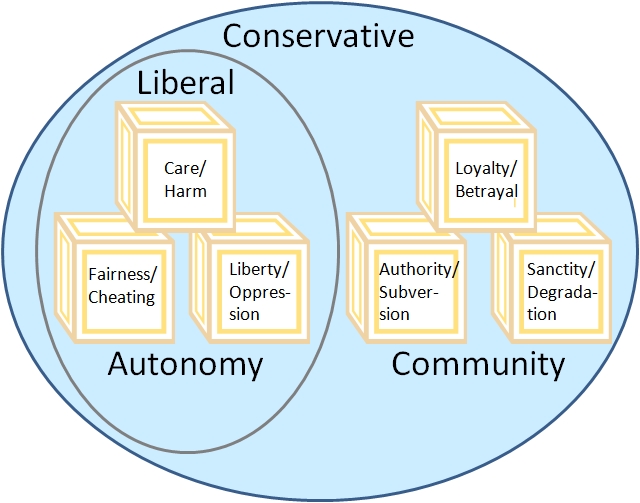
Moral Dimensions -
This graph was designed by www.theindependentwhig.com
|
One of the most promising interdisciplinary fields that draws from political science, social psychology, and anthropology is Moral Foundations Theory. Especially the work of Jonathan Haidt and Richard Shweder gives us an insight into the basis of human morality and the extent and limits of cultural and genetic influences on the formation of moral ideas and principles.
In their research, Dr. Haidt and Dr. Shweder developed several dimensions through which individuals and groups evaluate the morality of events. Different ideologies focus on different dimensions of morality, and these differences are central, for example, to understand the different worldviews of conservatives, liberals and libertarians. That a deeper understanding and self-reflection of these dimensions could be an important element in building bridges across partisan divides in politics. An excellent starting point to get into the field of Moral Foundations Theory is Haidt's The Righteous Mind: Why Good People are Divided by Politics and Religion. |
Politics of Culture and Cultural Differences
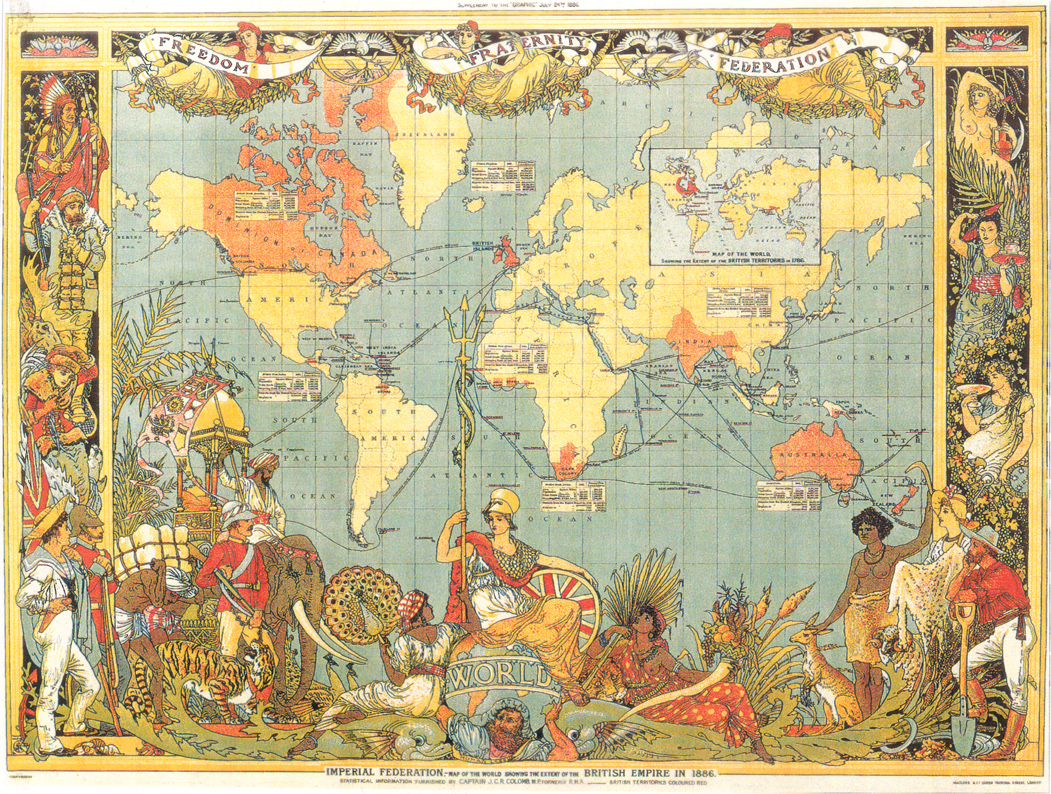
British Empire 1886
One of the central aims of my research is to reestablish the importance of culture in political science with a special emphasis on the relationship between culture and the institution of the state. I undertake this task because the inclusion of cultural factors in political analysis has fallen out of fashion. Since the 1960s, culture has largely been viewed as an ungraspable concept in political science, inherently less powerful in its explanatory capacities than rational choice and methodological individualism. I challenge this view and seek to develop a new theoretical approach toward culture in political science, an approach that is based on three distinct subfields of the discipline: Political theory, political psychology, and institutionalism. Building bridges between these fields will allow me to relocate the concept of culture in the discipline of political science to a more central and less obscure position between the quantitative and the qualitative social sciences.
Postmodernity and German Political Thought
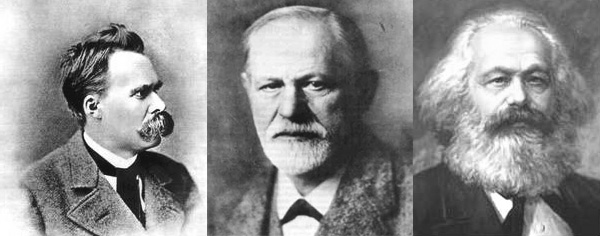
Nietzsche, Freud, and Marx
19th century German philosophy is a central part of my research interests. Starting with G.W.F. Hegel, German philosophy was continuously concerned with the question of "Recognition" and the desire of human beings to have their individual dignity recognized by the rest of society. Especially Friedrich Nietzsche offers a philosophical approach that leaves significant room to bring culture as an essential element of societal and individual evolution back into the picture. To this point, this was done most
successfully by Francis Fukuyama and his book The End of History and
the Last Man.
successfully by Francis Fukuyama and his book The End of History and
the Last Man.